

When drafting War Rising, I wanted to be able to conjure positive memories for Rayne since he has to face so many dark ones. Rayne is a character who refuses to talk about his past so I had to find various ways to motivate him to tell his story. I figured using dinners featuring foods he could have eaten with his human family would create a relaxed environment and a strong sense of nostalgia for a character who values family and really needs to feel comfortable to open up, even to his wife at times.
Thankfully, Spain, Portugal, and Morocco have some great sources documenting cuisine in Islamic Spain including a surviving copy of a thirteenth-century Andalusian cookbook.
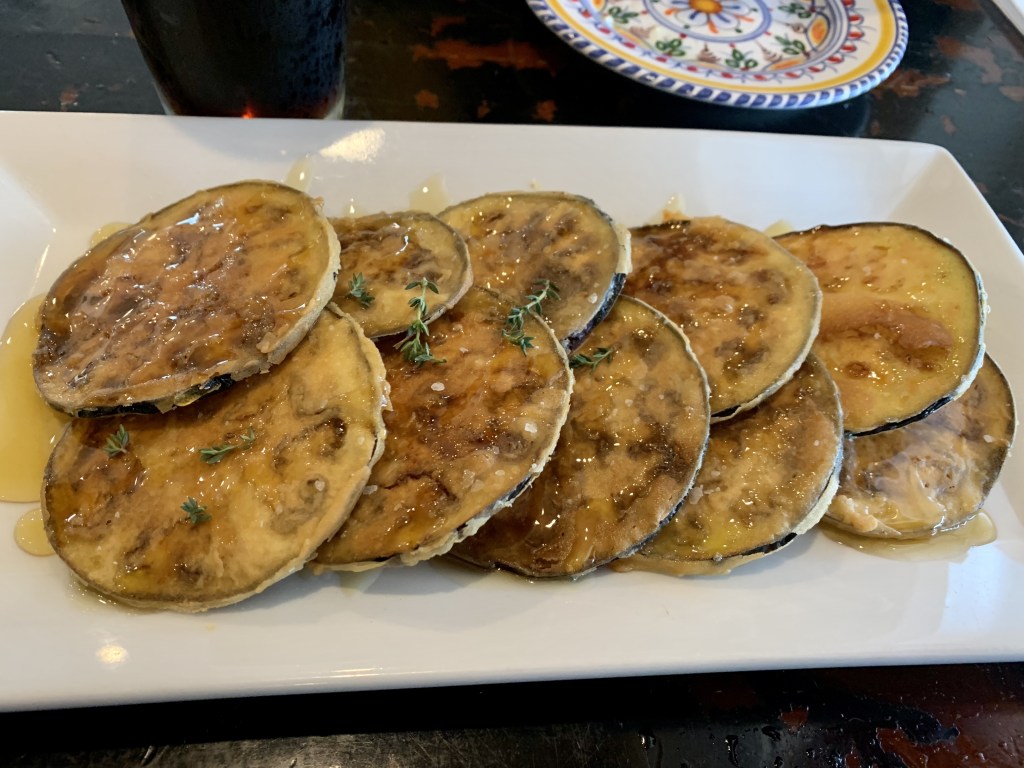
My favorite food moment in War Rising is when Rayne recalls being a young boy eating fried eggplant with honey and salt at his parents’ banquet table. The flavor and smell immerse Rayne back into his childhood. Watching her husband caught up in pleasant flashes of the past, Grace decides to sample one of the golden slices on her plate.
While the Arabs introduced eggplant to Spain, the domesticated form we eat today actually originates from China and India. From there, it made its way to the Middle East then migrated westward along trade routes and via conquest into Africa and Europe.[1] Asian eggplant does have a much older African cousin. In 2018, scientists confirmed the wild African variety is a separate strain from the Asian eggplant. This wild strain originated in Northern Africa then spread across the African continent and Asia most likely through the movement and migration of “mammalian herbivores.”[2] The varieties of this family of eggplant are incorporated into many African cuisines. I wouldn’t be surprised at all if the African variety traveled with the Asian eggplant across the Straits of Gibraltar and into Spain with the Amazigh, Arab, and Persian forces that expanded Islam’s reach across the Mediterranean world.
Berenjenas Fritas Con Miel is believed to have been first cooked in Spain by the Moors during the Islamic Conquest of the Iberian Peninsula. There are some folks that argue it should be topped with molasses and not honey. But I chose honey over molasses based on my research. While forms of sugar are present in Europe during the Middle Ages, they are documented in the later Middle Ages as a sweetener brought home from soldiers who went on Crusade, which was restricted to the elite classes. Sugar wasn’t used on a daily basis and was considered a luxury and medicinal good. Additionally, sugar cane production in Al-Andalus doesn’t begin until the tenth century, which is after the story takes place.[3]
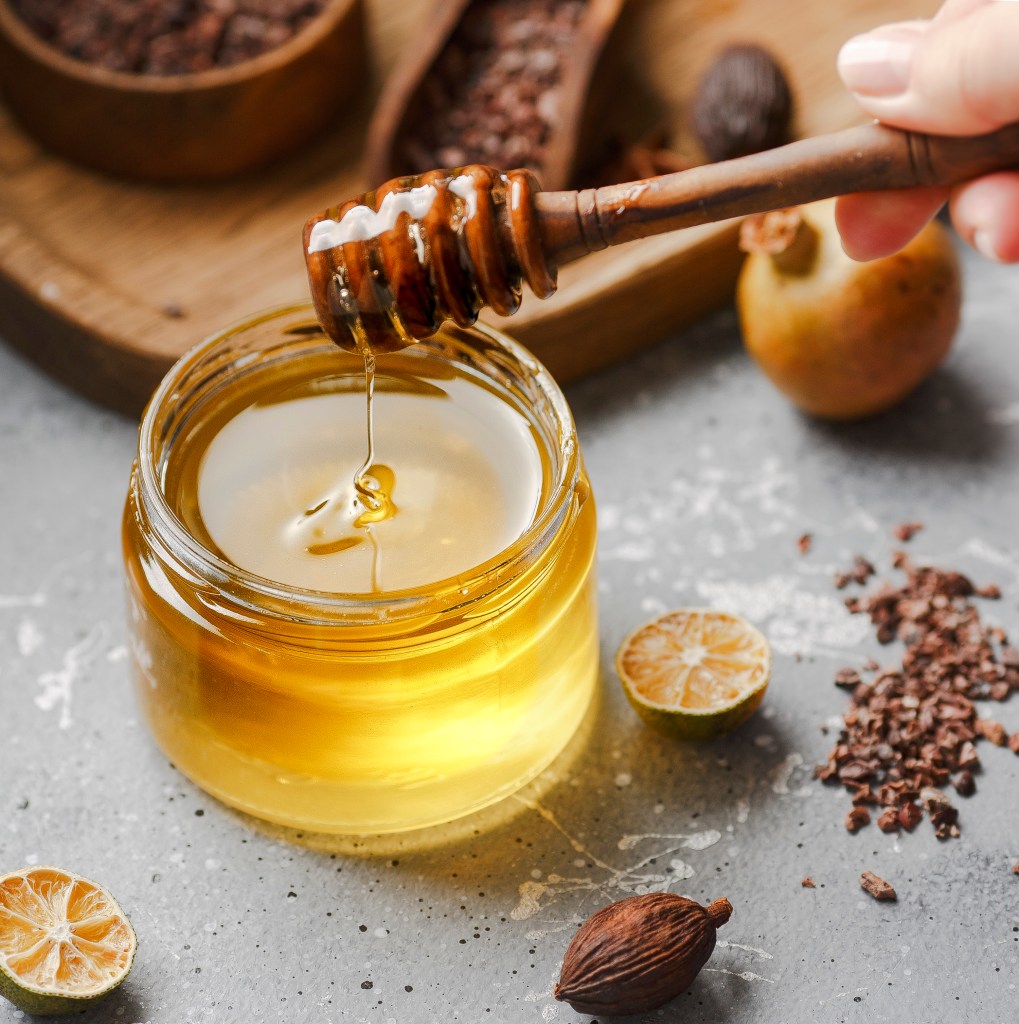
Molasses does appear to be use in Asian countries like India all the way back in 500 BCE, and there are some versions made from sugar beets predating sugar’s arrival in Europe, but it isn’t referenced for general cooking in many of the recipes I was able to find for the region or in the thirteenth-century cook book.[4] On rare occasion, it does show up in a desert recipe or two.
Keep in mind the cookbook that I primarily took recipes from was written three hundred years after sugar production had begun in Spain and when War Rising takes place. In contrast to sugar, there are multiple recipes with honey throughout the cook book. Honey has long been used as a sweetener in the region. There are even cave paintings from 7000 BCE in Valencia showing humans harvesting honey. Roman records and medieval ones capture its usage as both food and medicine, so it adds a nice touch of historical legacy that might be missing if I had gone with molasses.[5] Based on my research, I would wager the topping of fried eggplant with molasses, even though viewed as traditional in certain regions, is a trend that started well after the ninth century. Additionally, Spanish honey has been traded, and was even used as currency at times, for centuries. Today, Spain is the second largest honey producer in Europe.[6]
This delicious eggplant dish is not complicated to make. You just need to be careful when pan frying the pieces or using a deep fryer. I have not attempted them in an air fryer, but one day, I might get around to it. You do need to plan ahead as the eggplant slices need to be soaked in milk, thyme, salt, and pepper for a few hours prior to cooking. But it’s well worth the wait. The first time I had fried eggplant at La Tienda my reaction was similar to Grace’s. I wondered how I hadn’t eaten this before because it’s such a delicious dish, and even though it’s fried, it’s not heavy on the stomach at all.
Here are pics from my first attempt making them at home. They aren’t as pretty as La Tienda’s, but they were delicious.


Here is a recipe from our favorite local tapas place, La Tienda, for those who would like to try and make them at home. I understand from the chefs and waitstaff that this is their top-selling tapas dish.
https://www.tienda.com/recipes/berenjenas-fritas.html
Thanks for reading!
Cat
For those that prefer to listen rather than read, here is the podcast link: https://www.buzzsprout.com/1991756/12443453
You can also listen to the episode on the podcast page of this website.
Blog Post Sources:
[1] “The Master Gardener Journal.”
[2] Aubriot et al., “Shedding New Light on the Origin and Spread of the Brinjal Eggplant (Solanum Melongena L.) and Its Wild Relatives.”
[3] Jiménez-Brobeil et al., “Introduction of Sugarcane in Al-Andalus (Medieval Spain) and Its Impact on Children’s Dental Health.”
[4] “Molasses – New World Encyclopedia.”
[5] “The Honey Association – History.”
[6] “Honey.”
Aubriot, Xavier, Sandra Knapp, Mindy M. Syfert, Péter Poczai, and Sven Buerki. “Shedding New Light on the Origin and Spread of the Brinjal Eggplant (Solanum Melongena L.) and Its Wild Relatives.” American Journal of Botany 105, no. 7 (July 2018): 1175–87. https://doi.org/10.1002/ajb2.1133.
“Honey.” Accessed September 25, 2022. https://agriculture.ec.europa.eu/farming/animal-products/honey_en.
Jiménez-Brobeil, Sylvia A., Rosa M. Maroto, Marco Milella, Zita Laffranchi, and Candela Reyes Botella. “Introduction of Sugarcane in Al-Andalus (Medieval Spain) and Its Impact on Children’s Dental Health.” International Journal of Osteoarchaeology 32, no. 1 (2022): 283–93. https://doi.org/10.1002/oa.3064.
“Molasses – New World Encyclopedia.” Accessed September 25, 2022. https://www.newworldencyclopedia.org/entry/Molasses.
“The Honey Association – History.” Accessed September 25, 2022. https://www.honeyassociation.com/about-honey/history.
“The Master Gardener Journal.” Accessed September 25, 2022. https://cals.arizona.edu/maricopa/garden/html/pubs/0203/eggplant.html.



 Random Musings from the Mind of a Dreamer and a Writer